At Connecting Pathways, we are dedicated to advancing Indigenous Cultural Safety (ICS) through research, knowledge translation, and community partnerships. Rooted in reciprocity and respect, our work bridges Indigenous and non-Indigenous ways of knowing to create culturally safe environments where equity, dignity, and trust can thrive. We provide consulting, training, and innovative frameworks that empower organizations to engage ethically and meaningfully with Indigenous Peoples.
Our Vision
Our vision is to model pathways for Indigenous Cultural Safety (ICS) within research. We aim to strengthen the capacity of mainstream research structures to uphold Indigenous-led inquiry and self-determination, while embedding anti-Indigenous racism accountability as a core pillar of research and evaluation. Through our services and resources, we aspire to create safer research environments that honor Indigenous knowledge, advance equity, and contribute to the health and wellness of Indigenous Peoples and communities.
Our Mission
Our mission is to advance Indigenous Cultural Safety (ICS) in research and evaluation by providing consulting, training, and frameworks that honor Indigenous knowledge systems. We work to dismantle systemic barriers, support ethical and culturally safe practices, and foster meaningful partnerships between Indigenous and non-Indigenous communities. Through this work, we aim to strengthen trust, equity, and reconciliation across the research landscape.
Our Approach
We ground our work in Indigenous Cultural Safety (ICS) and relational accountability. Our consulting approach weaves Indigenous and other knowledge systems that creates space for dialogue, trust, and ethical collaboration. Guided by frameworks such as Ethical Space, Third Space, and Two-Eyed Seeing, we support organizations in dismantling systemic barriers, fostering respect, and embedding culturally safe practices across research and evaluation.
We believe that lasting change emerges when relationships are nurtured, protocols are honored, and knowledge is shared with reciprocity. Every engagement is tailored to the unique priorities of the community and organization, ensuring both integrity and impact.
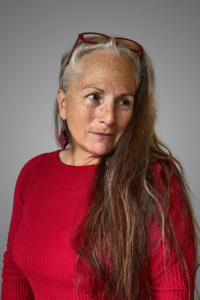
Our team is composed of Tara Erb and Jimena Chalchi, Indigenous scholars dedicated to advancing cultural safety, ethical research practices, and community engagement. We are committed to helping organizations build trust, foster respect, and move toward meaningful reconciliation through culturally safe approaches.
Together, Tara and Jimena bring decades of experience in Indigenous Cultural Safety (ICS), supporting the creation of environments where equity, dignity, and Indigenous knowledge can thrive.
Tara Erb is of mixed Moose Cree First Nation from Moose Factory and French European ancestry and grew up in Toronto, Ontario. She completed her Bachelor of Arts in Sociology at the University of Victoria (UVic) and a Master of Arts in Sociology (UVic), with a research focus on facilitating Indigenous cultural safety and anti-racism training. Tara is currently completing her PhD in the Faculty of Health Sciences at Simon Fraser University with a research focus on Indigenous Cultural Safety in Research Environments, specifically ethics and ethical processes. Her key interests include research on Indigenous health and wellness, Indigenous Cultural Safety, anti-Indigenous racism, social theory, ethics, knowledge translation and program evaluation.
Jimena Garcia (Chalchi) is of mixed Mayan-Astur ancestry and grew up in Jovel in the Mayab. They hold a Master of Arts in Global Leadership from Royal Roads University. Their research focuses on global Indigenous-led recovery, revitalization and practice of traditional medicine, healing, and well-being and wisdom practices. They have studied, researched and practiced Indigenous medicine and developed frameworks for intercultural collaboration with Indigenous partners to support the creation and development of culturally grounded wellness programs and products. Jimena currently offers expert consulting and mentorship in Indigenous Cultural Safety and Trauma-Informed Practice, advancing transformative approaches in program development and evaluation, knowledge translation, and research administration.
Cultural humility is vital because it emphasizes respectful partnerships based on mutual learning and understanding, rather than a hierarchical research-expert model. It requires acknowledging privilege intersections and committing to self-reflection and lifelong learning to address one’s own biases.
Cultural humility is a lifelong commitment to self-evaluation and self-critique, to redressing the power imbalances… and to developing mutually beneficial and non-paternalistic partnerships with communities. (Tervalon & Murray-García, 1998, p. 123)
Cultural Competence refers to the ability of individuals and organizations to effectively interact with people of different cultures by acquiring and applying knowledge, skills, and awareness to understand and respect cultural differences.
Cultural competence is the ability of systems to provide care to patients with diverse values, beliefs and behaviours, including tailoring delivery to meet patients’ social, cultural, and linguistic needs (Betancourt et al., 2002, p. 293).
Cultural Sensitivity involves being aware that cultural differences and similarities exist and influence values, learning, and behaviour. It’s often considered a first step toward more inclusive practices.
Cultural sensitivity is being aware that cultural differences and similarities between people exist without assigning them a value — positive or negative, better or worse, right or wrong (National Maternal and Child Health Center on Cultural Competency, 1997).
Cultural Safety goes beyond awareness and competence by focusing on power imbalances, systemic discrimination, and the others experience. It involves creating environments that are spiritually, socially, emotionally, and physically safe for people, where there is no denial of identity or experience.
Cultural safety requires health professionals to examine their own culture, attitudes, and assumptions, and to recognize and address the power dynamics of healthcare that can contribute to marginalization (Ramsden, 2002, p.99).
Uy skweyul~ A very good new day I am making this introduction following our oral tradition ..My UY hwulmuhw SNÁ is kQwa’ste’not ..English name is charlene george ..I am from t’souke (a community that is Coast Salish ~ NuuChaNulth) & am honored to carry a second heritage English/French.... This blending of heritages speaks much of what my life & gifts have been ..being a bridge to both heritages by finding the gifts .. strengths & joy each brings ..following that strong mind given by my grandparents.... As an artist & scholar ..weaving inspirations from culture .. history ..stories & the interconnected world into bridges to facilitate change.... With the goal ..to make this world a better place for our children & many generations to follow ..honoring past & blending future....
+1 250 986 6094
+1 250 882 6818
info@connectingpathways.ca
Sooke, BC, Canada
We look forward to connecting with you
connectingpathways.ca / © 2025 CONNECTING PATHWAYS